Showing posts with label Penguin. Show all posts

Yellow-Eyed Penguin


True Wild Life | Yellow-Eyed Penguin | The yellow-eyed penguin is one of the few penguin species found north of the Antarctic Ocean, and as it's name suggests, this species of penguin is easily idenitfied by it's yellow coloured eyes and bright yellow band that runs from it's eyes round the back of the yellow-eyed penguin's head. The yellow-eyed penguin is found off the coast of the south island of New Zealand where this species gathers in colonies along the beaches and boulder fields. The yellow-eyed penguin is also found on a few of the islands of the main island including Stewart, Auckland and the Campbell Islands.


The yellow-eyed penguin generally searches for food up 10 miles offshore, and travels (on average) around 15 miles away from the colonies nesting site. The yellow-eyed penguin leaves the colony at dawn and returns the same evening during chick rearing, although may spend 2 or 3 days at sea at other times. The yellow-eyed penguin is one of the larger species of penguin with adult individuals reaching 75cm in height, with the males generally being slightly larger than the female yellow-eyed penguins. The yellow-eyed penguin was thought to have been closely related to the tiny little penguin found in a similar area, although recent research suggests that the two are actually fairly genetically different.


The yellow-eyed penguin is a carnivorous animal, that like all other penguin species, survives on a diet that is only comprised of marine animals. Krill and small crustaceans make up the bulk of the yellow-eyed penguin's diet along with larger organisms including squid and various species of fish. The yellow-eyed penguin is usually found nesting in the forests and scrub that line the New Zealand coast and although historically undisturbed, the yellow-eyed penguin now has a number of land-dwelling predators including cats, dogs and foxes along with rats and weasels that hunt their eggs.


On average, the yellow-eyed penguin breeds once a year, forming pairs that usually remain faithful to one another. The female yellow-eyed penguin lays two eggs in her nest in the forest which are incubated by both parents for up to a couple of months, when only one of the eggs will usually hatch. The yellow-eyed penguin chicks are fed and kept warm by their parents and remain with them until the chicks are nearly a year old. Today, the yellow-eyed penguin listed as an endangered animal with an estimated wild population of less than 4,000 individuals. It is now the rarest penguin in the world due to deforestation and the introduction of mammalian predators.

Royal Penguin


True Wild Life | Royal Penguin | The royal penguin is a medium to large sized species of penguin that is found inhabiting the freezing waters that surround the Antarctic continent. The royal penguin is best known for the yellow feathers than grow from it's forehead to the back of it's head and are not to be confused with the macaroni penguin which they are closely related to. Like other penguin species, the royal penguin spends the majority of it's life hunting out at sea and are usually found in the nutrient rich waters that surround Antarctica. However, royal penguins are known to only breed on Macquarie Island, a rocky south-western Pacific island that lies roughly half way between New Zealand and Antarctica.


Until recently, the royal penguin and the macaroni penguin where thought to be the same species but there are a number of distinct differences between the two. Royal penguins have white chins and faces, where the face of the macaroni penguin is black. Royal penguins also breed exclusively on Macquarie Island, a place inhabited by no other penguin species. All penguins are fantastic swimmers and the royal penguin is no exception. Royal penguins use their powerful flippers and streamlined bodies, aided by their webbed feet to soar through the water and are able to reach speeds of nearly 20mph. Royal penguins also dive to depths of up to 150m in order to catch food, with dives usually lasting for a few minutes.


The royal penguin is a carnivorous animal, that like all other penguin species, survives on a diet that is only comprised of marine animals. Krill and small crustaceans make up the bulk of the royal penguin's diet along with larger organisms including squid and various species of fish. Royal penguins can be at sea for days at a time whilst hunting. The royal penguin has no natural land-based predators due to the fact that royal penguins inhabit pretty harsh environments. Large leopard seals hunt the royal penguin in the water along with large sharks and killer whales. Royal penguin population have also been seriously affected by human hunting for the oil found in their feathers.


Royal penguins
nest on beaches or on bare areas on slopes covered with vegetation along the island's coast. Royal penguins are colonial birds, nesting in scrapes on the ground up to a mile inland (these sites are known as rookeries). The female royal penguin lays two eggs which are incubated for 35 days. The chicks leave the nest after a couple of months returning when they are 5 to 6 years old to begin breeding themselves. Today, the royal penguin has been listed as a vulnerable species as populations were seriously affected by over hunting at the beginning of the 20th century. This species is now protected so can no longer be poached for it's oil.

Rockhopper Penguin


True Wild Life | Rockhopper Penguin | The rockhopper penguin is a group of penguins that are closely related and share the same love of jumping over rocks to get about, rather sliding around on their bellies in the normal penguin fashion. There are three different species of rockhopper penguin which are the western rockhopper penguin, the eastern rockhopper penguin and the northern rockhopper penguin. Rockhopper penguins are found throughout the sub-Antarctic and in regions of the southern Indian and Pacific Oceans. The regions occupied by the rockhopper penguin depend on the species. The western rockhopper is found around the tip of the South America; the eastern rockhopper breeds on sub-Antarctic islands of the Indian and western Pacific oceans and the northern rockhopper penguin breeds on islands of Tristan da Cunha as well as on Amsterdam and St Paul Islands.


The rockhopper is a small sized species of penguin that is similar in appearance to the slightly larger royal penguin and the macaroni penguin. Rockhopper penguins have black-grey upper parts and a straight, bright yellow eyebrow ending in long yellowish plumes projecting sideways behind a red eye. Their beaks are usually orange/red in colour. All penguins are fantastic swimmers and the rockhopper penguin is no exception. Rockhopper penguins use their powerful flippers and streamlined bodies, aided by their webbed feet to soar through the water. Their unique way of moving about on land also means that the rockhopper penguin is able to inhabit even more extreme environments than other penguin species.


The rockhopper penguin is a carnivorous animal, that like all other penguin species, survives on a diet that is only comprised of marine animals. Krill and small crustaceans make up the bulk of the rockhopper penguin's diet along with larger organisms including squid and various species of fish. Rockhopper penguins can be at sea for days at a time whilst hunting and catch their food by diving deep into the water for minutes at a time. The rockhopper penguin has no natural land-based predators due to the fact that rockhopper penguins inhabit pretty harsh environments, uninhabitable to other animals . Large leopard seals hunt the rockhopper penguin in the water along with large sharks and killer whales. Rockhopper penguin population have also been seriously affected by human hunting, and are easily affected by changes in the water from oil spills and chemical pollutants.


Rockhopper penguins nest on beaches, high up on the cliffs and sometimes inland on islands throughout the sub-Antarctic (these sites are known as rookeries). The female rockhopper penguin lays two eggs which are incubated for just over a month and usually fledge (leave the nest) when they are between 2 and 3 months old. Today, the rockhopper populations throughout the southern hemisphere have been drastically declining and all three species are now at risk. The northern rockhopper penguin is classified as endangered, where the others are not quite in as much danger.

Penguin


True Wild Life | Penguin | The penguin is found pretty much only in the Southern Hemisphere, only a handful of penguins though are in the far south. The emperor penguin inhabits the icy lands of Antarctica. Despite what many think, the penguin is not only found in arctics, one species of penguin lives as far north as the Galapagos Islands.


Generally the penguin is around 1m tall, but one species, known as the fairy penguin, that only 40m high! The penguins stay together in large colonies with anywhere up to 50,000 penguins in the group. The penguin spends 75% of its time in the water hunting for food. It is thought that the Antarctic penguins eat krill and squid where the penguins in warmer climates tend to eat fish.


The penguin is one of the few species of bird, that despite having wings, is unable to fly. To make up for this though, penguins have perfected their jumping technique with some penguins being able to jump a couple of meters! Penguins seem to have no special fear of humans and penguins have often approached groups of explorers without hesitation. This is probably because there are no land predators in Antarctica or the nearby offshore islands that prey on or attack penguins. Instead, penguins are at risk at sea from predators such as the seal and sharks.


Typically, penguins do not approach humans closer than about 3 meters (10 ft) at which point the penguins tend to become nervous and retreat. This is also the distance that Antarctic tourists are told to keep from penguins (tourists are not supposed to approach closer than 3 meters, but are not expected to withdraw if the penguins come closer). It is the penguins home after all.

Magellanic Penguin


True Wild Life | Magellanic Penguin | The Magellanic penguin is a small to medium sized species of penguin found inhabiting the rocky islands off the coast of parts of South America. The Magellanic penguin is most closely related to the African penguin, the Galapagos penguin and the Humboldt penguin which it is similar in appearance to. Despite being classed as a threatened species, the Magellanic penguin is one of the most numerous of all of these types of penguin. The Magellanic penguin is found breed off the coast of Argentina and southern Chile and on the Falkland islands further south. Like other species of penguin the Magellanic penguin spends the majority of it's time hunting for food in the surrounding ocean, coming onto land to nest in large colonies on the beaches.


The Magellanic penguin is a medium sized penguin that can grow up to 76cm in height. Like other penguin species, the flippers of the Magellanic penguin are not that long but act as the perfect tools for propelling the Magellanic penguin through the water when it is in search of food. Like the other penguins in their group, Magellanic penguins have white and brownish black markings, with a broad dark band running across the top of their white chest. Like other penguin species, the Magellanic penguin is a highly sociable bird, living in flocks with numerous other Magellanic penguin individuals. As well as gathering together in large colonies on the beaches during the breeding season, the Magellanic penguin flocks also spend their time out at sea hunting together rather than on their own.


The Magellanic penguin is a carnivorous predator and it's diet is solely comprised of marine-dwelling animals. The Magellanic penguin primarily hunts cuttlefish and squid in the surrounding waters along with numerous species of fish (including sardines), and krill. Like other penguin species, the Magellanic penguin can dive quite deep for a few minutes at time in order to catch their prey. The relatively small size of the Magellanic penguin means that it is preyed upon by a number of hungry marine carnivores. Leopard seals and large fur seals are the primary predators of the Magellanic penguin along with sharks and killer whales. Due to the fact that they nest on quite inhospitable land though, the Magellanic penguin has no natural predators on their breeding beaches.


Magellanic penguins nest together on beaches on the rocky islands in their natural range. The female Magellanic penguin lays two eggs in a nest on the beach which are incubated by both parents for up to 40 days. Once hatched, the chicks are cared for by their parents until they are about a month old and are able to fend for themselves. Today, although quite numerous in some parts, the Magellanic penguin in considered to be a threatened species primarily due to changes in their natural habitats. Oil spills are thought to be the biggest threat to the Magellanic penguin and their native breeding sites across south-east Pacific.

Macaroni Penguin


True Wild Life | Macaroni Penguin | The macaroni penguin is a large-sized species of penguin found in the Sub-Antarctic regions. the macaroni penguin is one of six species of crested penguins is so closely related to the royal penguin, that some people class the two as the same species. The macaroni penguin spends most of its time during the colder winter months fishing in the cold oceans where the macaroni penguin is more protected from the bitter conditions of the Antarctic winter on the land. However, when the summer is approaching and temperatures at the South Pole increase, the macaroni penguin makes it way to land in order to breed.


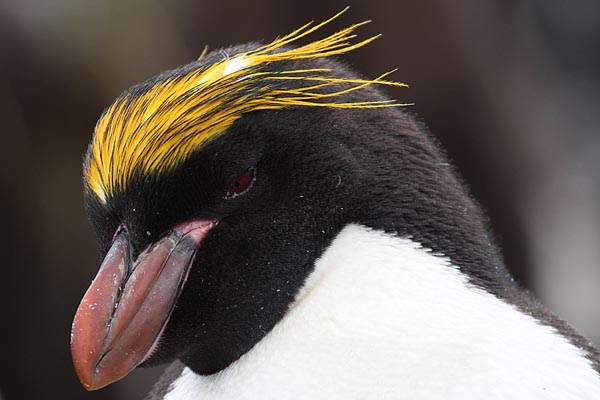
The macaroni penguin is the most numerous species of penguin on the planet as there approximately 18 million macaroni penguin individuals. The macaroni penguin population numbers are declined severely over the past few decades meaning that the macaroni penguin is today considered to be a vulnerable species. Macaroni penguins are one the biggest and heaviest species of penguin as adult macaroni penguins generally average about 70cm in height. The macaroni penguin also has a couple of very distinctive features including a long red-coloured beak and a crest of thin bright-yellow feathers on its head.


Like other penguin rpecies, the macaroni penguin is a carnivorous animal as the only source of food is in the surrounding water. The macaroni penguin spends six months during the cold winter months hunting fish, squid, krill and crustaceans which the macaroni penguin catches in its long beak. The macaroni penguin only has a couple of natural predators in the freezing Antarctic Ocean as there are only a number of animal species that can survive there. Leopard seals, killer whales and the occasional passing shark are the only real predators of the macaroni penguin.


The macaroni penguin returns to the land during the warmer summer months in order to breed. Macaroni penguins gather in large colonies which can contain up to 100,000 individuals in order to lay their eggs. Female macaroni penguins generally lay two eggs a couple of days apart that hatch after about six weeks. Both the male and female macaroni penguin parents help to incubate the eggs and raise the chicks.