Golden Poison Frog


True Wild Life | Golden Poison Frog | The Golden Poison Frog is the most poisonous animal in the world. Unfortunately, they are on the brink of extinction because tropical rainforests are disappearing. The golden poison Frog's skin is densely coated in alkaloid poison, one of a number of poisons common to dart frogs  which prevents nerves from transmitting impulses, leaving the muscles in an inactive state of contraction. This can lead to heart failure or fibrillation.


The Golden Poison Frog's natural enemy is a genus of snakes called the Leimadophis Epinephelus. These snakes are unaffected by the lethal poison of the Golden Poison Frog. The Golden Frog lives on the ground in humid forests, and is only known from primary forest. It is not known whether or not it can adapt to secondary habitats. The eggs are laid on the ground and the males transport the larvae to permanent pools.  The main natural sources of food of Golden Poison Frogs are the ants in the genera Brachymyrmex and Paratrechina, but many kinds of insects and other small invertebrates can be devoured, specifically termites and beetles, which can easily be found on the rainforest floor. This frog is considered the most voracious of the dendrobatids.


In captivity, the frog is fed with Drosophila fruit flies, cochineals and crickets, the larvae of various insects, and other small live invertebrate foods. An adult frog can eat food items much larger in relation to its size than most other dendrobatids. Golden Poison Frog is a very important frog to the local indigenous cultures, such as the Choco Emberá people in Colombia's rainforest. The frog is the main source of the poison in the darts used by the natives to hunt their food. The Emberá people carefully expose the frog to the heat of a fire, and the frog exudes small amounts of poisonous fluid. The tips of arrows and darts are soaked in the fluid, and keep their deadly effect for over two years.
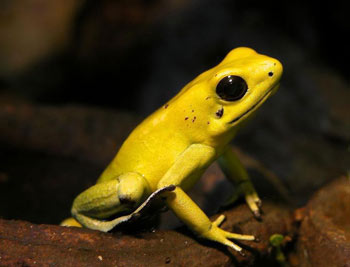

In many ways, humans have benefited from the Golden Poison Frog. Yet today, the wild frogs are in danger of extinction. They live in only certain parts of tropical rainforests that are disappearing as deforestation and farm land development continues in various parts of the world.

Przewalski's Horse


True Wild Life | Przewalski's Horse | The Przewalski's Horse is the only remaining wild horse still surviving in the world. Once, it became extinct because it was hunted or it lost in the feeding frenzy with farm animals. Przewalski's Horse is a rare and endangered subspecies of wild horse  native to the steppes of central Asia, specifically China and Mongolia. At one time extinct in the wild, it has been reintroduced to its native habitat in Mongolia at the Khustain Nuruu National Park, Takhin Tal Nature Reserve and Khomiin Tal.


In the wild, Przewalski's Horses live in social groups consisting of a dominant stallion, a dominant lead mare, other mares, and their offspring. The patterns of their daily lives exhibit horse behavior similar to that of feral horse herds. Each group has a well-defined home range; within the range, the herd travels between three and six miles a day, spending time grazing, drinking, using salt licks and dozing. At night, the herd clusters and sleeps for about four hours. Ranges of different herds may overlap without conflict, as the stallions are more protective of their mares than their territory.


With a short, muscular body, Przewalski’s horses are smaller than most domesticated horses. They have a pale belly and beige to reddish-brown coat that is short during summer and thicker and longer in winter. Their muzzle is white, and they don an erect and dark mane that lines their large head and neck. They stand about 12 to 14 hands tall at the shoulder, or about 48 to 56 inches (122 to 142 centimeters), and weigh about 440 to 750 pounds (200 to 340 kilograms). While extant in the wild, these horses ate grasses and other vegetation on the steppe, shrublands, and plains of western Mongolia and northern China.


In the 1960s, Przewalski's Horses disappeared once. They were hunted for their meat and hide. Others lost in the feeding frenzy with farm horses. In the 1990s, a project started to return Przewalski's Horses to the wild. Zoos in Europe raised Przewalski's Horses and returned them to wildlife sanctuaries in hometown, Mongolia, and the number of Przewalski's Horses in the wild is starting to increase, little by little.

Mountain Zebra


True Wild Life | Mountain Zebra | The Mountain Zebra is an endangered species of equid native to south-western Angola, Namibia and South Africa. It has two subspecies, the Cape Mountain Zebra  and Hartmann's Mountain Zebra, though it has been suggested these should be considered separate species. Like all zebras, it is boldly striped in black and white and no two individuals look exactly alike. The stripe can be black and white or dark brown and white. Their stripes cover their whole bodies except for their bellies. The Mountain zebra also has a dewlap.


As its name suggests, the Mountain Zebra lives in higher places than other zebras. Its numbers are decreasing because of hunting for its skin and meat, and also because of droughts. Mountain Zebras are found on mountain slopes, open grasslands, woodlands and areas with sufficient vegetation. Some Mountain Zebras live in the rainforest. Mountain zebras live in hot, dry, rocky, mountainous and hilly habitats. They prefer slopes and plateaus and can be found as high as 1,000 metres above sea level, although they do migrate lower in the winter season. Their diet consists of tufted grass, bark, leaves, buds, fruit and roots. They often dig for ground water.


Mountain zebra are most active in the early morning and late afternoon. They spend up to half of the daylight hours feeding. Mountain zebra live in herds consisting of one adult male (stallion), one to five adult females (mares) and their young. The stallion is the dominant member of the herd. Sometimes herds come together to form temporary groups of up to 30 individuals. Mountain zebra never form the large herds characteristic of Plains zebra, however, they do exhibit a harem-type social system. During the winter they move up to 20 kilometres from a water source. Where they are in danger of being hunted, Mountain zebra water at night, however, when they are not in danger of being hunted, they water at any time.


The Mountain zebras form small family groups consisting of a single stallion, one, two, or several mares, and their recent offspring. Bachelor males live in separate groups and attempt to abduct young mares and are opposed by the stallion. Mountain zebra groups do not aggregate into large herds like Plains zebras. Mares may give birth to one foal every twelve months. Like other equids, zebra foals are able to stand, walk and suckle shortly after they are born. The mare nurses the foal for up to a year, and the young zebra then leave to join bachelor groups or harems.


The Mountain Zebra lives in higher places than any other zebra. It lives in two different locations in southwestern Africa and South Africa. The biggest threat to Mountain Zebras is hunting by people. These animals have long been hunted for their beautifully patterned skins and meat. The Mountain Zebras that live in South Africa have nearly been wiped out twice in the past.